Data processing for CMEMS drifters [2024.08.20]
Notes on splitting the CMEMS in situ drifter product (INSITU_GLO_PHY_UV_DISCRETE_NRT_013_048) into individual drifter tracks in MATLAB. See the Drifter page for the product itself.
Why the tracks need splitting
Grouping longitude, latitude and velocity by platformId alone can merge drifters from different periods under one ID.
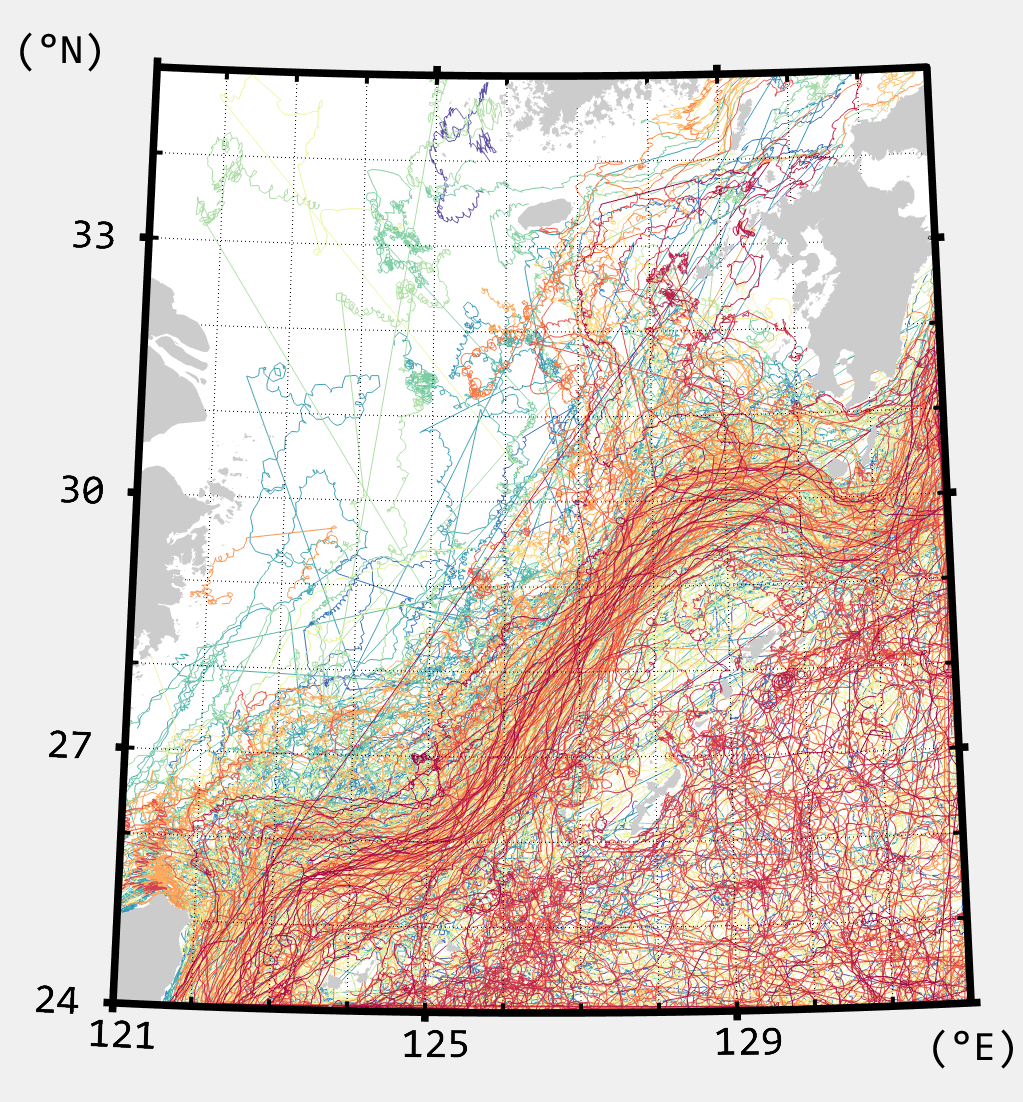
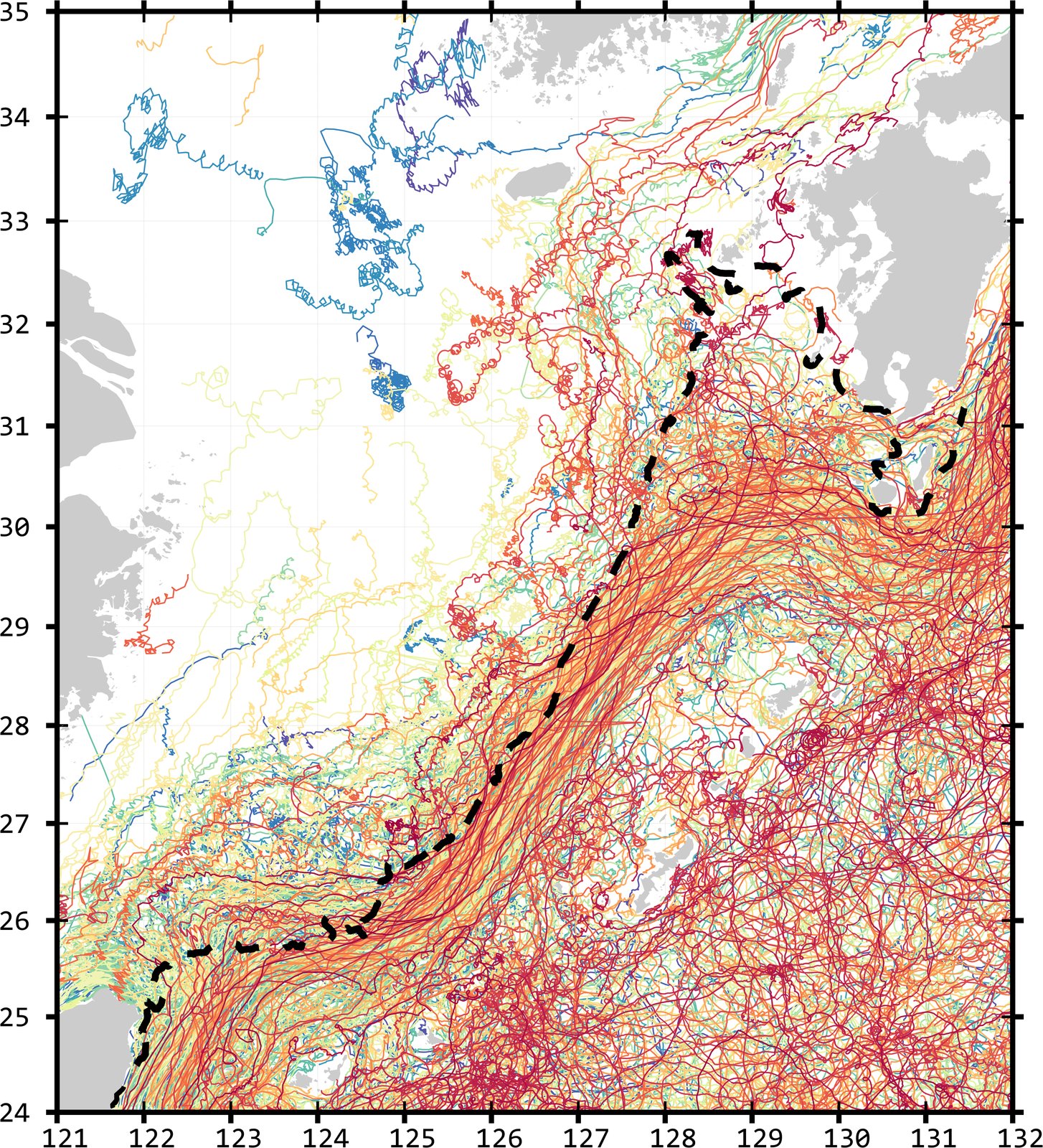
Plotted as is, such groups show up as straight lines between unrelated segments (left figure below).
To avoid this, the time axis of each ID is checked. CMEMS drifters report at 3-hour or 1-hour intervals, so any gap longer than 6 hours is treated as the boundary between two different drifters. The result is the right figure. The black dashed line in that figure is the 200 m isobath.
Drogue depth
In the East China Sea every drifter except the TEMP records had its drogue at 15 m.
For other regions, check this yourself with unique() on the depth variable (drfdp in the code below).
Quality-control flags are not yet applied
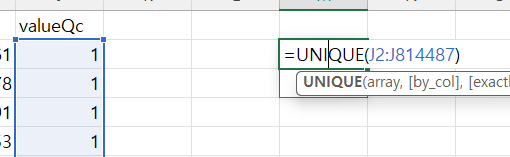
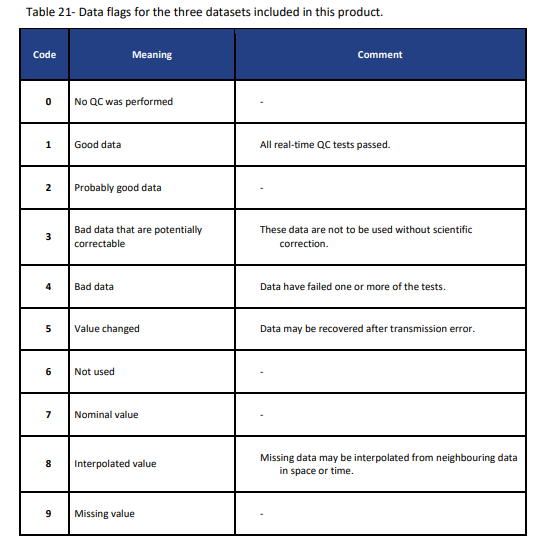
Filtering by the QC variable has not been implemented. Opening the CSV in Excel and listing the unique values of valueQC
shows both 1 and 4, so an additional step that takes the QC flag into account will be needed.
MATLAB code
Read the CSV, split the tracks, and save a mat file
clc; clear; close all;

fnm = "cmems_obs-ins_glo_phy-cur_nrt_drifter_irr_ECS.csv";
tbl = readtable(fnm, "VariableNamingRule","preserve");

drfid = unique(tbl.platformId);

drfdt = NaT(1, length(drfid), "TimeZone","UTC");

%%
clc;
para = string(tbl{:,1});
for i1 = 1:length(drfid)
    id = para == 'EWCT' & tbl.platformId == drfid(i1);
    hamster = datetime(string(tbl.time(id)), "InputFormat","uuuu-MM-dd'T'HH:mm:ss.SSSZ", 'TimeZone','UTC');
    drfdt(1:length(hamster), i1) = hamster;
end

%%
drfu = nan(size(drfdt));
drfv = nan(size(drfdt));
drflo = nan(size(drfdt));
drfla = nan(size(drfdt));
drfdp = nan(size(drfdt));
% drfdp2 = nan(size(drfdt));

for i1 = 1:length(drfid)
    id = para == 'EWCT' & tbl.platformId == drfid(i1);
    hamster = tbl.value(id);
    drfu(1:length(hamster), i1) = hamster;
    hamster = tbl.longitude(id);
    drflo(1:length(hamster), i1) = hamster;
    hamster = tbl.latitude(id);
    drfla(1:length(hamster), i1) = hamster;
    hamster = tbl.depth(id);
    drfdp(1:length(hamster), i1) = hamster;

    id = para == 'NSCT' & tbl.platformId == drfid(i1);
    hamster = tbl.value(id);
    drfv(1:length(hamster), i1) = hamster;

    % when the temp variable is measured, the depth is 0.5 rather than 15
    % id = para == 'TEMP' & tbl.platformId == drfid(i1);
    % hamster = tbl.depth(id);
    % drfdp2(1:length(hamster), i1) = hamster;
end

%%
clc
ad = length(drfid); adk = 1;

drfdt2 = drfdt;
drflo2 = drflo;
drfla2 = drfla;
drfv2 = drfv;
drfu2 = drfu;

% ck = nan(size(drfid));
for i1 = 1:ad
    hamster = drfdt2(:, i1); isnt = find(isnat(hamster));
    if ~isempty(isnt)
        hamster = hamster(1:isnt(1));
    end
    tdiff = find(diff(hamster) > hours(6));
    % ck(i1) = length(tdiff);

    if ~isempty(tdiff)
        tdiff2 = [tdiff; length(hamster)];
        drfdt2(tdiff2(1)+1:end, i1) = NaT;
        drflo2(tdiff2(1)+1:end, i1) = NaN;
        drfla2(tdiff2(1)+1:end, i1) = NaN;
        drfu2(tdiff2(1)+1:end, i1) = NaN;
        drfv2(tdiff2(1)+1:end, i1) = NaN;

        for i2 = 2:length(tdiff2)
            ham2 = hamster(tdiff2(i2-1)+1:tdiff2(i2));
            drfdt2(1:length(ham2),ad+adk) = ham2;
            drflo2(1:length(ham2),ad+adk) = drflo(tdiff2(i2-1)+1:tdiff2(i2), i1);
            drfla2(1:length(ham2),ad+adk) = drfla(tdiff2(i2-1)+1:tdiff2(i2), i1);
            drfu2(1:length(ham2),ad+adk) = drfu(tdiff2(i2-1)+1:tdiff2(i2), i1);
            drfv2(1:length(ham2),ad+adk) = drfv(tdiff2(i2-1)+1:tdiff2(i2), i1);
            adk = adk+1;
        end
    end
end

drflo2(drflo2 == 0) = NaN;
drfla2(drfla2 == 0) = NaN;
drfu2(drfu2 == 0) = NaN;
drfv2(drfv2 == 0) = NaN;

save cmems_drf_ecs.mat drflo2 drfla2 drfu2 drfv2 drfdt2;